In the era of revolutionary weight loss medications, a new aesthetic challenge has emerged known as Ozempic Face. For millions of Americans, GLP-1 agonists like Ozempic, Wegovy, and Mounjaro have provided a long-awaited solution to obesity. However, rapid and massive weight loss often comes with an unintended price: a gaunt, hollowed facial appearance and significant skin laxity that can age a patient by decades.
At Tran Plastic Surgery, we understand that achieving your goal weight is a victory that deserves to be celebrated with a face that looks as vibrant and healthy as your body. While many patients initially turn to non-surgical fixes like dermal fillers, these often fail to address the structural root of the problem. This article explores why the Deep Plane Facelift, performed by triple-board certified surgeon Dr. Tuan Tran, is the definitive solution for restoring natural, youthful facial harmony.
1. What Is Ozempic Face?
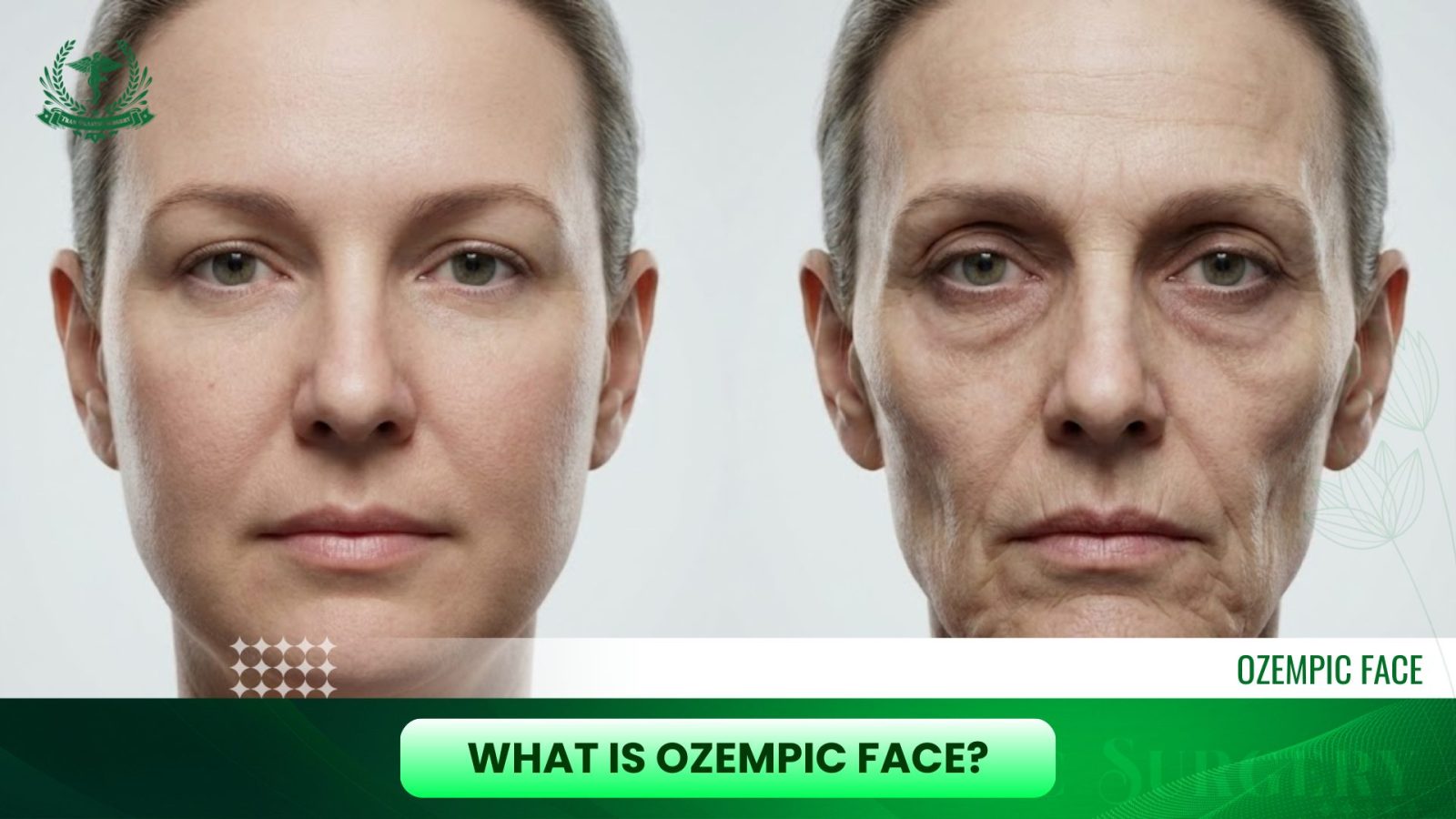
Ozempic Face is the colloquial term used to describe the specific pattern of accelerated facial aging associated with the rapid weight loss caused by semaglutide (Ozempic, Wegovy) and tirzepatide (Mounjaro). Unlike gradual weight loss, where the skin has some time to retract, the rapid drop in body mass index (BMI) induced by these medications often outpaces the skin’s elasticity.
The symptoms of Ozempic face are distinct and often include:
- Gaunt face from Ozempic: A skeletonized look caused by the depletion of deep fat pads in the cheeks and temples.
- Ozempic loose skin: Significant “crepey” skin texture and drooping, particularly around the jawline and neck.
- Facial volume loss: A lack of structural support that leads to sunken eyes and deep nasolabial folds.
- Saggy skin after weight loss: The formation of jowls and “turkey neck” due to the descent of soft tissues.
Whether you call it Wegovy face or Mounjaro face, the physiological mechanism is the same: the scaffolding that held your facial skin taut (fat) has dissolved, leaving the skin envelope too large for the underlying structure.
Read more:
- Fixing Ozempic Neck: How a Neck Lift Restores Your Jawline After Weight Loss
- Loose Skin After Ozempic: A Complete Guide to Body Contouring Surgery
2. Why Dermal Fillers Fail and Create Pillow Face?
When patients first notice these changes, the instinct is often to seek a non-surgical fix. How to fix an ozempic face without surgery? is a common question, and dermal fillers are frequently marketed as the answer. However, for the significant volume loss seen in these patients, fillers are rarely the correct solution.
2.1. The Volume vs Laxity Misconception
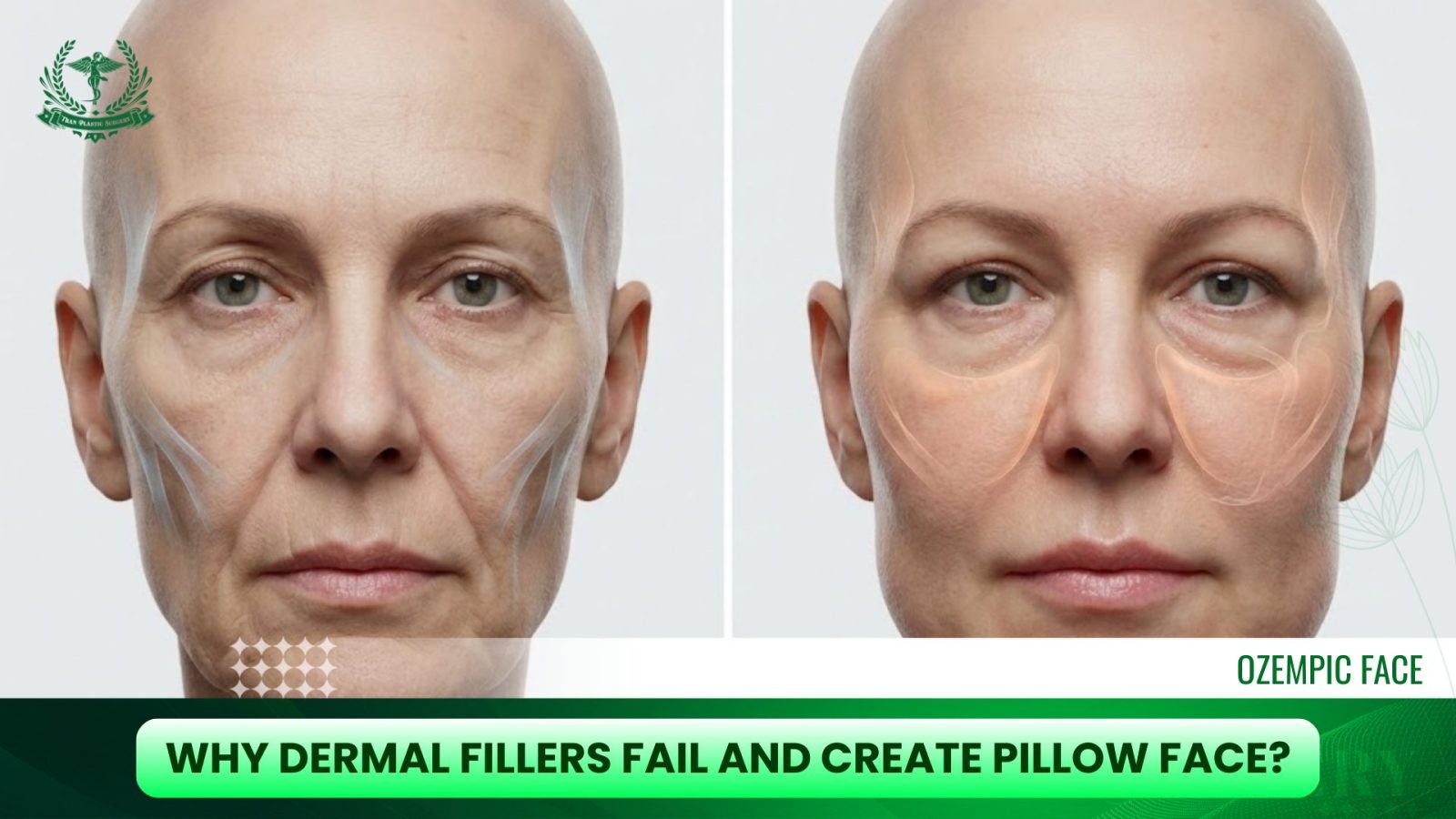
Fillers are designed to replace small amounts of volume, not to re-drape loose skin. To “fill out” the loose skin of an Ozempic face using only hyaluronic acid, a practitioner would need to inject massive quantities of product. This leads to Pillow Face or Moon Face a bloated, unnatural appearance where facial features lose their definition.
2.2. Migration and Malar Edema Issues
Furthermore, in a face with weakened ligament support, heavy fillers can migrate, pulling tissues down further due to gravity. Aggressive cheek filling can also block lymphatic drainage, leading to chronic malar edema (swelling under the eyes) and a puffy, tired look that persists regardless of sleep or hydration.
3. Deep Plane Facelift as the Structural Solution
For patients asking, “Will Ozempic face go away?”, the honest answer is that while hydration and nutrition help, the structural laxity is typically permanent. The most effective plastic surgery for Ozempic face is the Deep Plane Facelift.
3.1. How The Deep Plane Technique Works
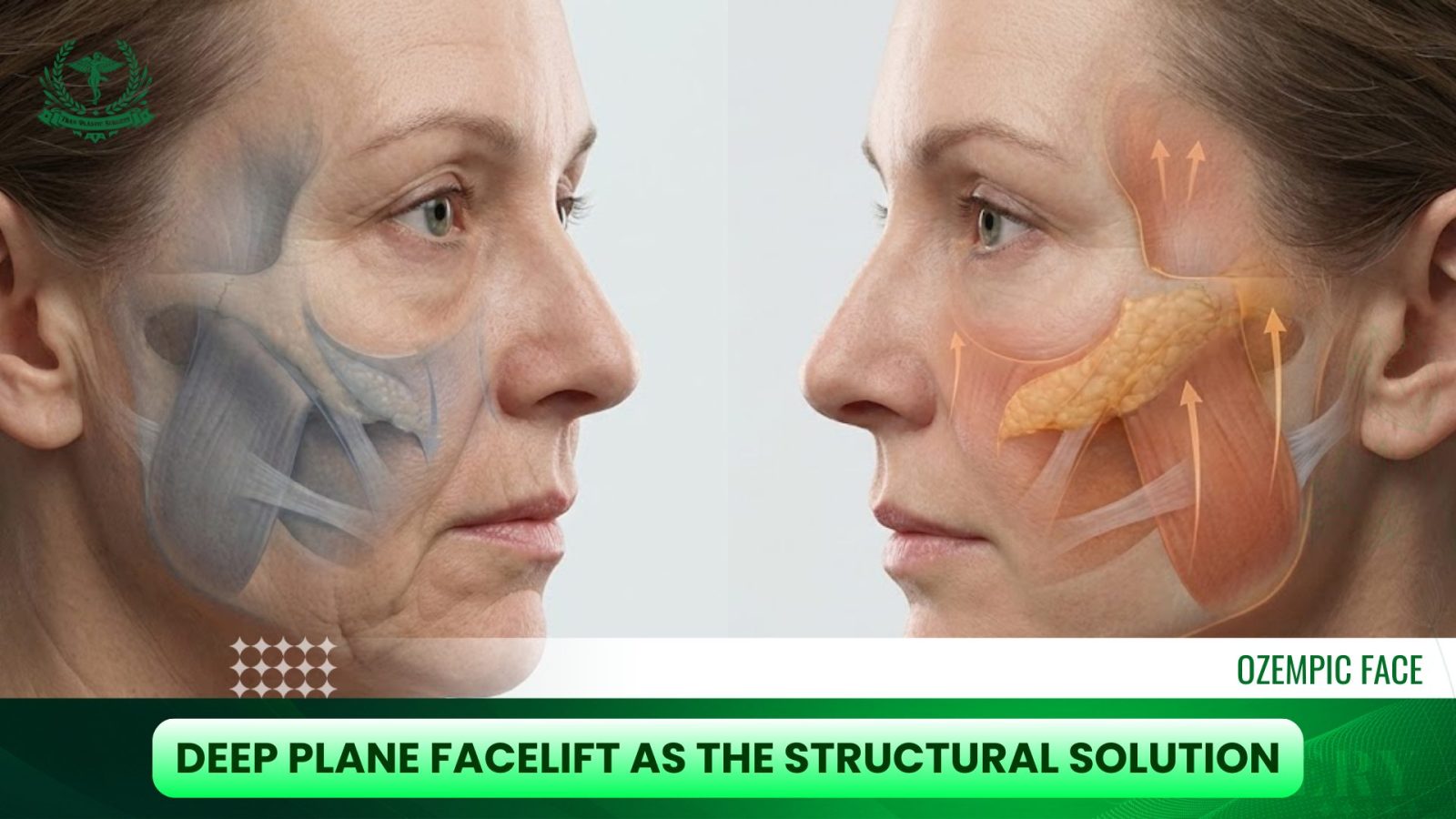
Unlike traditional facelifts that tighten only the skin or the superficial muscle layer (SMAS application), the Deep Plane Facelift releases the facial retaining ligaments that tether the soft tissues to the bone. Dr. Tuan Tran creates a composite flap of muscle and fat, repositioning the entire midface structure vertically.
3.2. Why It Is Superior for Weight Loss Patients
- Vertical Lift: Weight loss causes gravity to pull the face down. The Deep Plane technique lifts the tissues vertically, reversing the “dragged down” look without the “windblown” tightness of older techniques.
- Midface Restoration: The key to fixing the “gaunt” look is restoring the cheek volume. The Deep Plane lift repositions the fallen cheek fat pad back over the cheekbone, effectively “auto-filling” the hollow without synthetic products.
- Jowl Eradication: By lifting the platysma muscle and the lateral face in the deep plane, the jawline is defined sharply, removing the loose skin and fat that obscures the mandibular border.
- Longevity: Because the tissues are fully released and repositioned, the results are structurally stable. Deep Plane Facelifts typically last 10-15 years, significantly longer than SMAS lifts.
Read more: Facelift and Neck Lift methods, which is best for you?
4. Restoring Volume with Facial Fat Grafting
To fully correct the gaunt face from Ozempic, Dr. Tran often combines the facelift with facial fat grafting. This involves harvesting fat from the body (abdomen or thighs), purifying it, and injecting it into deep facial compartments.
The Procedure and Stem Cell Benefits
This autologous fat transfer achieves two primary goals:
- Replaces Volume: It refills the hollow temples and deep cheeks with living tissue that feels natural.
- Improves Skin Quality: The stem cells present in adipose tissue can help rejuvenate the thinning, “crepey” skin characteristic of rapid weight loss.
5. Preventing and Treating Ozempic Face at Tran Plastic Surgery
Preventing Ozempic face is difficult if you are losing weight rapidly, but managing your expectations and having a plan is key. If you are already experiencing Ozempic face side effects, choosing the right surgeon is the most critical decision you will make.
Why Choose Dr. Tuan Tran
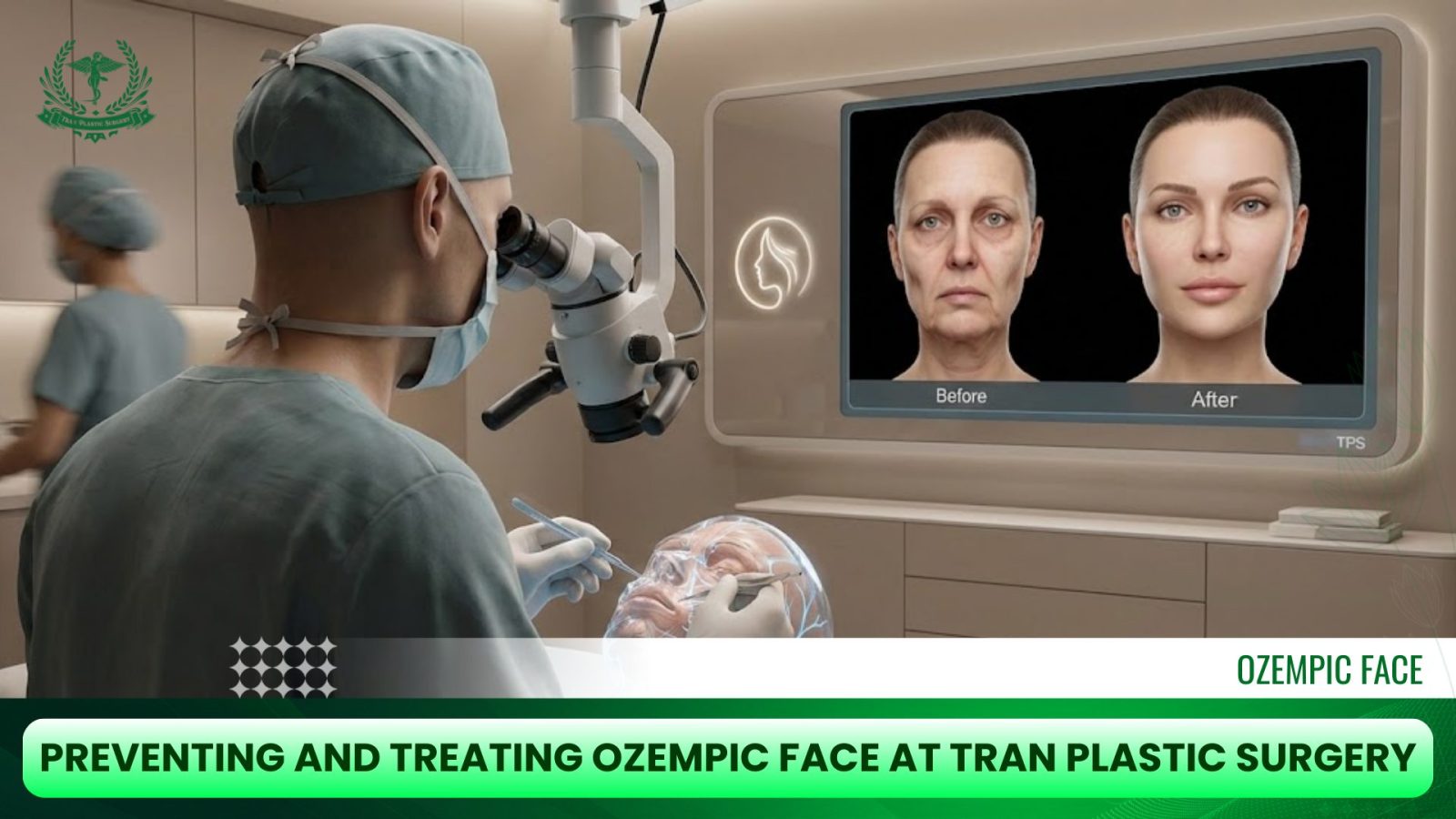
Dr. Tuan Tran is a Triple Board-Certified Plastic Surgeon (American Board of Plastic Surgery, American Board of Surgery, and Surgery of the Hand). His sub-specialty certification in Hand Surgery is particularly relevant to the Deep Plane Facelift. Hand surgery is the discipline of microsurgery working with nerves and vessels less than 1mm in diameter. This microsurgical precision allows Dr. Tran to navigate the delicate facial nerves in the deep plane with a safety profile and dexterity that ensure optimal results and minimize scarring.
Located in Huntington Beach, Tran Plastic Surgery serves as a center of excellence for post-weight loss rejuvenation in Orange County.
6. The Cost of Deep Plane Facelift
A common question is the cost of treating Ozempic face surgically. While prices vary based on individual anatomy and the inclusion of procedures like neck lifts or eyelid surgery, a Deep Plane Facelift is a significant investment in your long-term appearance.
In the current market (2024-2025), the cost for a Deep Plane Facelift typically ranges from $18,000 to over $40,000. While this is higher than a syringe of filler, the result is structural, natural, and lasts for over a decade, making it more cost-effective over time than years of temporary injections. Tran Plastic Surgery offers financing options to help patients manage this investment.
7. Realistic Ozempic Face Before and After Results
Patients can expect a recovery timeline of approximately 2-3 weeks for social downtime. Ozempic face pictures of Dr. Tran’s patients reveal not just a tighter jawline, but a restoration of the heart-shaped vitality of youth. Healthy convexities replace the “hollow” look, and the loose neck skin is virtually eliminated.
You worked hard to lose the weight; you shouldn’t have to sacrifice your face to do it. Ozempic Face is a structural problem that requires a structural solution. While fillers offer a temporary band-aid, they often lead to distorted aesthetics. The Deep Plane Facelift, combined with facial fat grafting, offers a definitive, natural-looking restoration.
If you are struggling with the effects of rapid weight loss on your face, contact Tran Plastic Surgery today to schedule a consultation with Dr. Tuan Tran and reclaim your confidence.