If you are struggling with a sagging Ozempic stomach after hitting your goal weight, you are not alone. While weight loss drugs like Ozempic, Wegovy, or Mounjaro are miraculous for melting fat, they often leave behind a deflated midsection that diet and exercise simply cannot fix. Understanding why this happens is the first step to restoring your confidence.
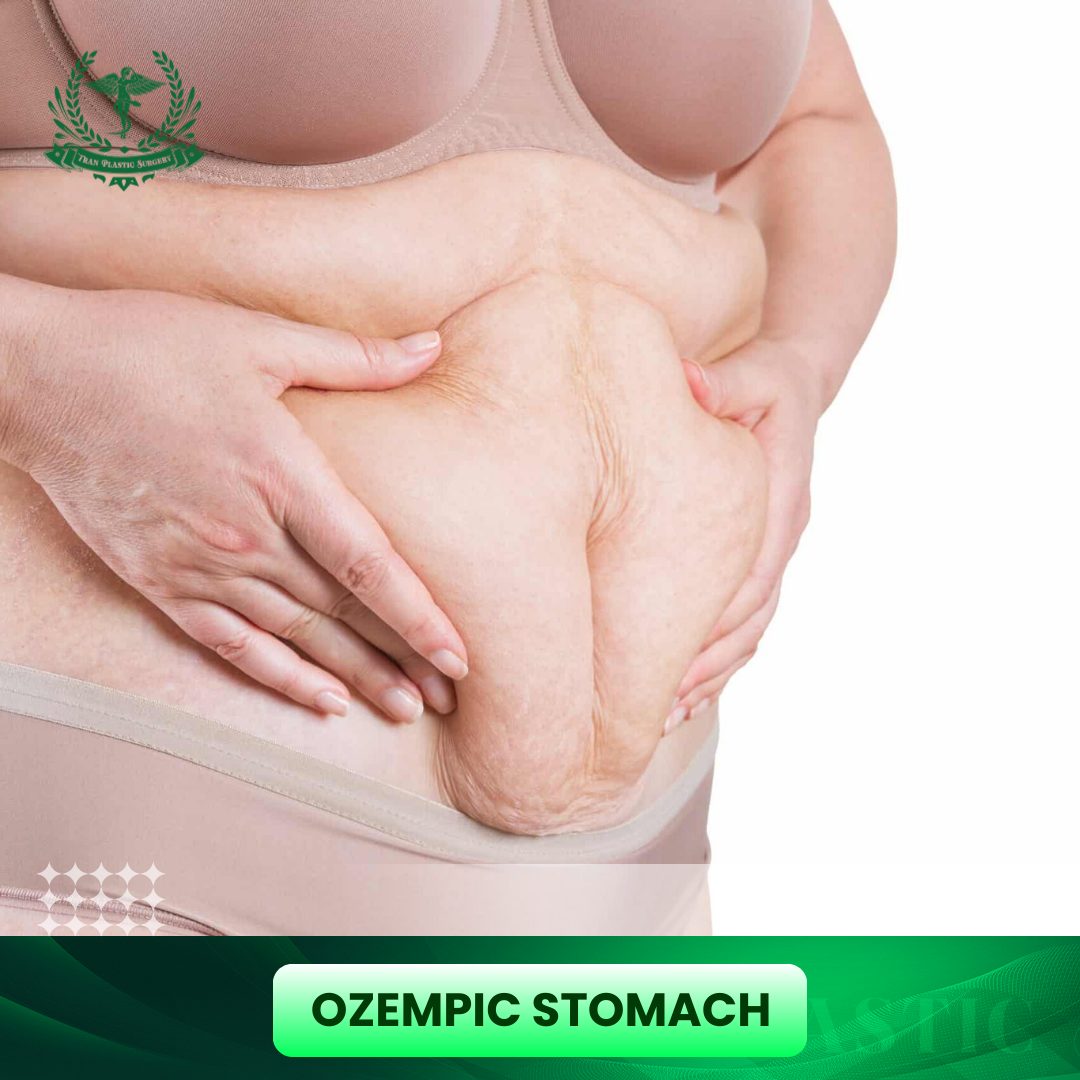
The term Ozempic stomach has exploded in popularity, but it refers to a specific aesthetic condition. It refers to the hollowed, deflated, or sagging appearance of the abdomen that occurs after rapid weight loss using GLP-1 agonists. While the medication is incredibly effective at reducing fat, it works faster than your skin can adapt. The result is a midsection that looks “empty” rather than toned.
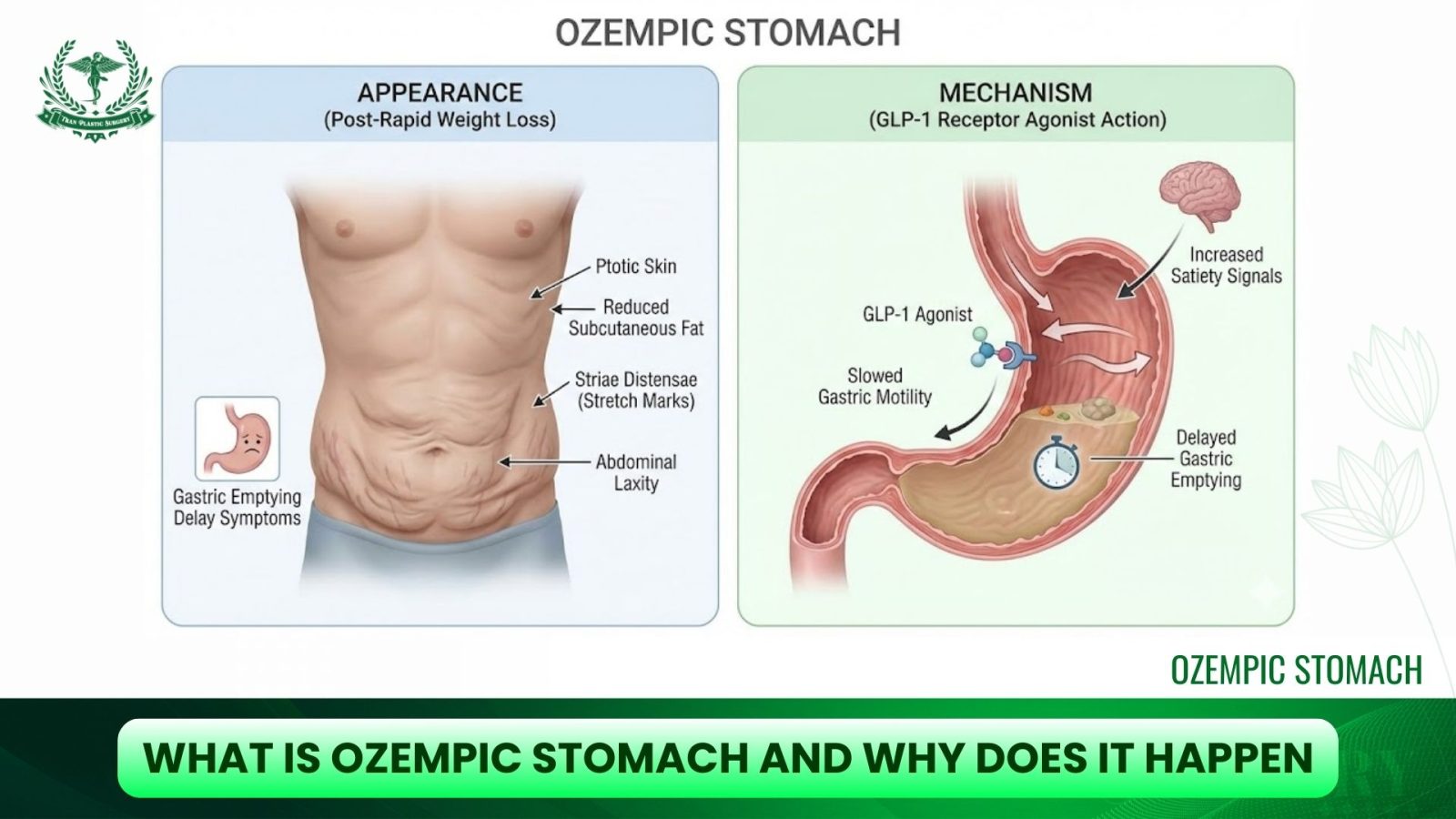
1.2. The Mechanism Behind the Sag
To understand why this happens, you have to look at how these medications work. Drugs like Ozempic and Wegovy cause significant weight loss in a very short period. When you lose fat this quickly, the collagen and elastin fibers in your skin do not have time to retract and snap back into place.Essentially, the volume that was propping your skin up disappears overnight, but the skin envelope remains the same size. This leaves you with tissue redundancy, excess skin that hangs, wrinkles, or folds, creating the characteristic look of the Ozempic stomach. It is not a failure of your weight loss; it is simply a discrepancy between fat loss and skin elasticity.>> You might be interested:
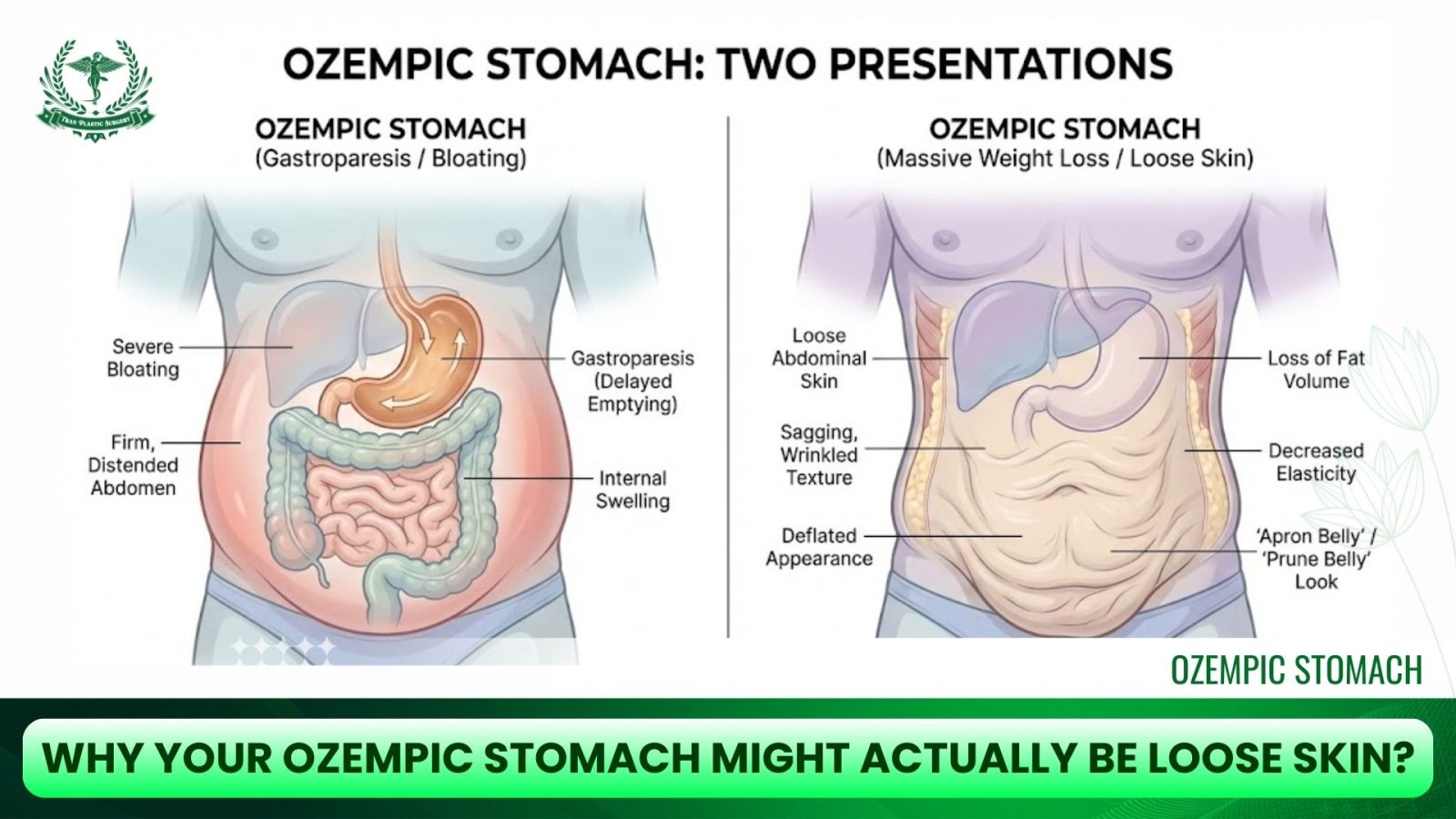
2. Why Your Ozempic Stomach Might Actually Be Loose Skin and Not Just Bloating?
Why Your Ozempic Stomach Might Actually Be Loose Skin?The term Ozempic stomach has become a catch-all phrase online, but it actually refers to two very different things. It is vital to distinguish between them before you book a consultation at Tran Plastic Surgery.For some, Ozempic stomach is a medical side effect. This involves severe bloating, nausea, and gastroparesis (delayed stomach emptying) caused by the medication. If your stomach feels hard, distended, and painful after eating, you are likely dealing with the internal side effects of the drug.For others, especially those who have lost 30, 50, or 100+ pounds rapidly, the Ozempic stomach is an aesthetic issue. The underlying fat dissolves, but the skin surface area remains the same. This results in a “prune belly” or “apron belly” appearance. What many patients mistake for stubborn belly fat is often just empty, hanging skin that has lost its elasticity.
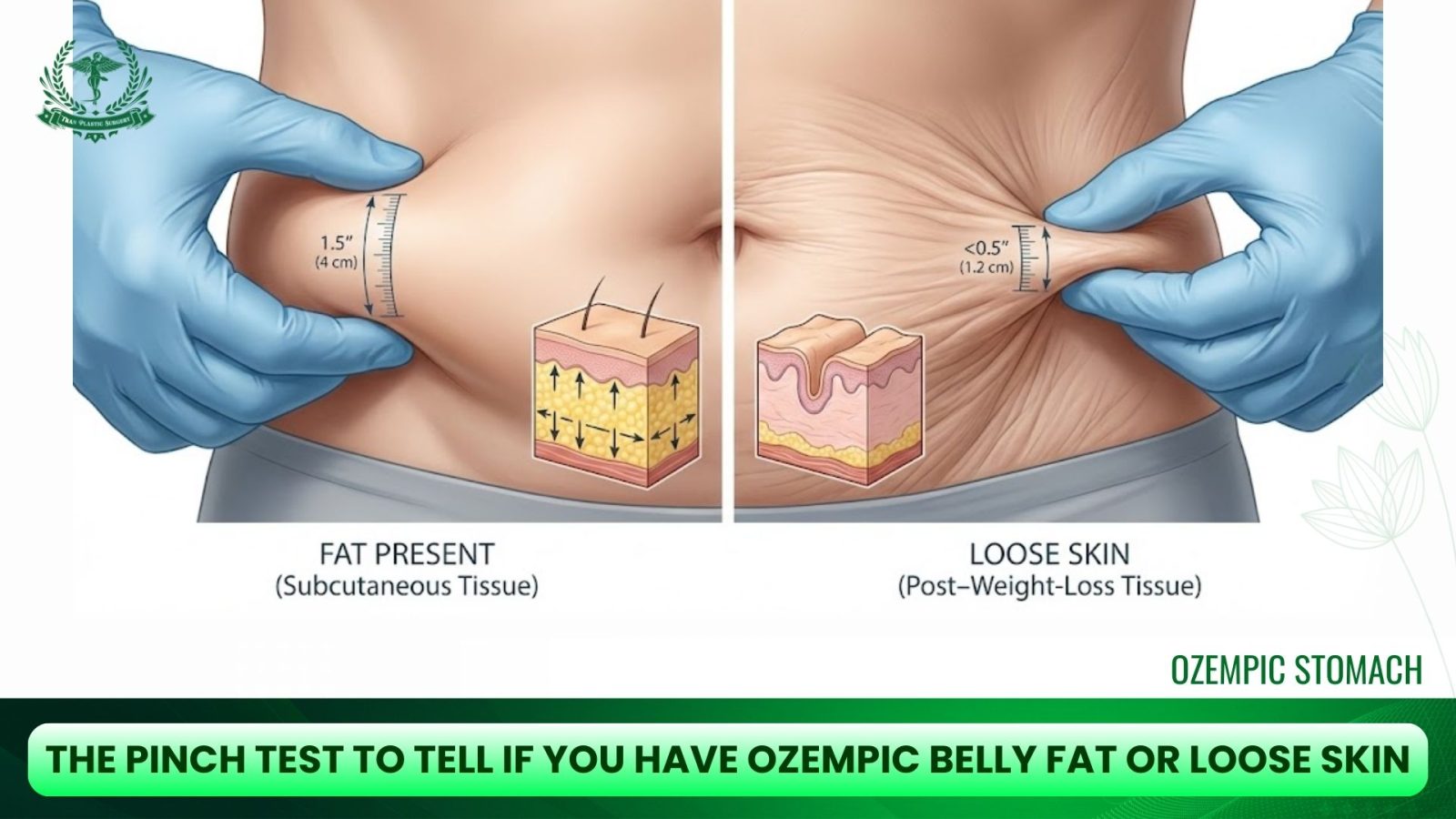
3. The Pinch Test To Tell If You Have Ozempic Belly Fat or Loose Skin
Before you spend hours researching liposuction, you can perform a simple diagnostic test at home to determine the nature of your abdomen. We call this the Pinch Test.Stand in front of a mirror and grab a fold of your stomach tissue with your hand.
If it feels thick: If you pinch the area and it feels firm and difficult to hold (typically thicker than an inch), you likely still have subcutaneous fat. In this case, you might be a candidate for fat reduction procedures.
If it feels thin: If you pinch the skin and it feels thin like paper, crinkles easily, or you can pull it significantly away from your body, this is loose skin. It feels empty because the fat that used to fill it is gone.
The Pinch Test To Tell If You Have Ozempic Belly Fat or Loose SkinNo amount of dieting, crunches, or additional Semaglutide doses will fix this loose tissue. This is a structural issue that requires surgical removal.
4. Why Liposuction Can Make Your Ozempic Body Look Worse
One of the most common misconceptions we see is patients requesting Lipo 360, hoping it will shrink their midsection. However, if you have the classic “Ozempic body” characteristics, liposuction can actually create a deformity.Think of your abdomen like a balloon. When the balloon is full of air (fat), the rubber (skin) is smooth and tight. If you let the air out of the balloon but the rubber doesn’t shrink, the balloon becomes a wrinkled, shriveled mess.Liposuction simply removes the fat (the air). It does not tighten the skin. If you perform aggressive liposuction on a patient with poor skin elasticity, the stomach will look smaller but significantly older, wrinklier, and more uneven. Liposuction is an excellent option for younger patients with elastic skin, but for patients who have undergone massive weight loss, it is rarely a standalone solution.
5. The Tummy Tuck Is The Gold Standard For Post-Weight Loss Skin Removal
For the vast majority of patients who have lost significant weight on GLP-1 medications, a Tummy Tuck (Abdominoplasty) is the required intervention.At Tran Plastic Surgery, we approach the tummy tuck not just as a skin removal procedure, but as a total core restoration. We understand that your weight loss journey has been long and complex, and our goal is to reveal the muscle definition you have worked so hard for.When performing a tummy tuck for Ozempic patients, we address three critical layers:
Skin Removal: We remove the panniculus, which is the “apron” of excess skin hanging over the pubic area. This eliminates skin-on-skin contact, which often causes rashes and discomfort.
Surface Smoothing: We tighten the remaining skin, pulling it down like a tight window shade to smooth out wrinkles and stretch marks.
Muscle Repair: Most importantly, we repair the abdominal muscles. Many patients suffer from Diastasis Recti (muscle separation). At Tran Plastic Surgery, we suture these muscles back together to create an internal corset, flattening your abdominal wall in a way that exercise alone cannot achieve.
The Tummy Tuck Is The Gold Standard For Post-Weight Loss Skin Removal
6. Choosing Between Mini Tummy Tuck vs Full Tummy Tuck or The Fleur de Lis
Not all tummy tucks are created equal. During your consultation, we will assess your specific skin laxity to determine the right approach.
The Mini Tummy Tuck: This is rarely indicated for massive weight loss patients. It only addresses a small amount of skin below the belly button. If you have loose skin above your navel, a mini tummy tuck will leave you disappointed with a bulging upper abdomen.
The Full Tummy Tuck: This is the standard procedure for most of our weight loss patients. It addresses the entire abdomen, from the rib cage to the pubic bone.
The Fleur-de-Lis Abdominoplasty: a specialized technique for those with extreme weight loss. If you have loose skin that hangs vertically (up and down) and also wraps horizontally around your sides, we may recommend the Fleur-de-Lis. This involves a vertical incision, allowing us to pull the waist in tightly from the sides for a dramatic transformation.
7. What Happens To Your Belly Button During An Ozempic Makeover
A detail that often goes overlooked is the umbilicus, or belly button. Significant weight gain and subsequent loss can distort the belly button, turning it into a horizontal slit or a frowning shape.During a full abdominoplasty at Tran Plastic Surgery, we do not just cut around the skin. We perform an umbilicoplasty, creating a new, youthful “innie” belly button that sits naturally on your new, flat stomach.
8. The Critical Timing For Plastic Surgery After Ozempic Timing
Timing is a safety issue, not just an aesthetic one. We generally require you to be weight-stable for at least 3 to 6 months before undergoing body contouring.If you are still losing weight, surgery is premature. Losing more weight after a tummy tuck will cause the skin to relax again, impacting your results. Conversely, if you stop taking Ozempic or Wegovy right before surgery and experience a “rebound” weight gain of visceral fat, this can stretch your internal sutures.Important Anesthesia Warning: New guidelines suggest that patients taking GLP-1 agonists should stop their medication for 1 to 2 weeks before surgery to reduce the risk of aspiration. Our team will coordinate closely with you to ensure your surgery is safe and effective.
9. The Reality of Tummy Tuck Scars vs The Confidence of A Flat Stomach
The trade-off for removing the “Ozempic apron” is a scar. There is no way to remove excess skin from the feet without making an incision.However, a well-placed tummy tuck scar is designed to sit very low on the pubic mound, making it easily hidden by underwear or bikini bottoms. While the scar will be red initially, it will fade significantly over 12 to 18 months. Most of our patients agree that trading a loose, hanging apron of skin for a hideable scar is a trade worth making.
10. Conclusion on Customizing Your Body Contouring Plan
The journey that began with a prescription for Ozempic or Mounjaro need not end with loose skin. While the medication addressed the metabolic side of weight loss, plastic surgery addresses the structural side. If your Pinch Test reveals loose skin rather than fat, liposuction is unlikely to be the answer. We invite you to schedule a consultation at Tran Plastic Surgery. Let us help you complete your transformation and finally reveal the body you have worked so hard to achieve.
11. Frequently Asked Questions about Ozempic Stomach Answered for Patients
If your “Ozempic belly” is caused by loose skin rather than fat, we generally advise against liposuction as it can make the wrinkling worse. We will evaluate your skin elasticity to determine whether you are a candidate for Lipo 360 or a tummy tuck.
We follow strict safety protocols. Typically, you must stop GLP-1 agonists 1 to 2 weeks before elective surgery to reduce the risk of aspiration under anesthesia. We will provide you with a detailed pre-operative schedule.
If you have lost significant weight (30+ lbs) rapidly, the skin fibers are often damaged and will not retract on their own. Surgery is usually the only practical option to remove this excess tissue.
A panniculectomy is a functional procedure that only removes the hanging “apron” of skin. A tummy tuck is a cosmetic procedure that removes skin and tightens the abdominal muscles for a contoured waist. At Tran Plastic Surgery, we often perform the full tummy tuck for the best aesthetic result.
Insurance may cover a panniculectomy if you have documented medical conditions, such as rashes. However, muscle repair and contouring in a tummy tuck are usually out-of-pocket expenses.
We prefer a BMI under 30 for the safest results, but we evaluate every patient individually. If you are weight-stable and healthy, a slightly higher BMI may be acceptable.
Yes, but we recommend waiting until you are finished having children. Pregnancy will again stretch the skin and muscles, potentially reversing the results of your surgery.
You will feel tight and sore, mainly due to the muscle repair. Most patients take 2 weeks off work and return to full exercise after 6 weeks. We provide a comprehensive pain management plan to keep you comfortable.
This is a technique involving a vertical incision to tighten skin horizontally and vertically. It is often necessary for patients who have lost significant weight to achieve a snatched waistline.
This is often caused by Diastasis Recti (muscle separation). No amount of Ozempic can fix separated muscles; only surgical repair during a tummy tuck can flatten the abdominal wall.
Board-Certified Plastic Surgeon in Orange County, CA
With over a decade of expertise, Dr. Tuan Tran is a renowned surgeon dedicated to the highest standards of surgical excellence. He meticulously reviews and vets all content to ensure patients receive accurate, evidence-based insights and the latest safety protocols in modern medicine.