When it comes to restoring a natural, permanent hairline, FUE hair transplant (Follicular Unit Extraction) has become the gold standard in modern hair restoration. This complete guide walks you through exactly how the procedure works, who it’s for, what recovery looks like, and what to expect at every stage — from your first consultation to your final results.
What Is FUE Hair Transplant (Follicular Unit Extraction)?
Follicular Unit Extraction (FUE) is a minimally invasive hair transplant technique in which individual hair follicles are extracted one by one from the donor area — typically the back or sides of the scalp — and precisely implanted into areas experiencing thinning or baldness.
Unlike older strip-based methods such as FUT (Follicular Unit Transplantation), FUE does not require removing a strip of scalp tissue. There are no stitches, no linear scar, and recovery is significantly faster. Each follicular unit — a natural grouping of 1 to 4 hairs — is extracted using a micro-punch tool ranging from 0.6 mm to 1.0 mm in diameter, preserving surrounding tissue and maximizing graft survival.
Today, FUE hair transplant is considered the gold standard in hair restoration surgery worldwide. It is preferred by both surgeons and patients for its natural-looking results, minimal scarring, and ability to restore a permanent, full hairline that blends seamlessly with existing hair. The quality of the result depends heavily on the surgeon’s technical skill, artistic judgment in hairline design, and experience with individual follicle handling.
Why FUE Is the Gold Standard in Hair Restoration
FUE has become the most widely performed hair transplant technique in the world. It offers a combination of benefits that older methods simply cannot match:
- No linear scar — Because follicles are extracted individually, there is no strip of scalp removed and no long scar at the back of the head. Patients can wear their hair short without any visible scarring.
- Faster recovery — Most patients return to daily activities within 5 to 7 days. There are no sutures to remove and no prolonged wound care.
- Natural results — Each graft is placed at a precise angle and depth to mimic natural hair growth patterns, producing a seamless, undetectable result.
- Versatility — FUE can be used on the scalp, beard, eyebrows, and other body areas. It works for both men and women experiencing hair loss.
- Permanent outcome — Transplanted follicles are taken from the permanent donor zone, the area genetically resistant to hair loss, so results are lifelong.
- Suitable for all hair types — FUE works across different hair textures, colors, and ethnicities, making it an inclusive option for diverse patient populations.
How Does the FUE Hair Transplant Procedure Work? Step-by-Step
Step 1 — Consultation and Hair Loss Assessment
Your FUE journey begins with a comprehensive one-on-one consultation with Dr. Tuan Tran at our Huntington Beach clinic. During this visit, Dr. Tran evaluates your scalp health, donor area density, and degree of hair loss using the Norwood Scale for men or the Ludwig Scale for women.
Many clinics now offer pre-surgery imaging tools that allow patients to preview projected results before committing to the procedure. This sets realistic expectations and helps guide the surgical plan.
Step 2 — Preparation and Local Anesthesia
On the day of your procedure, the donor area is shaved or trimmed to allow precise access to individual follicles. Local anesthesia is administered to both the donor and recipient areas to ensure you remain comfortable and pain-free throughout the entire procedure. Most patients report minimal discomfort — comparable to a mild sting during the anesthesia injection — and feel nothing during the extraction and implantation phases.
Step 3 — Donor Follicle Extraction
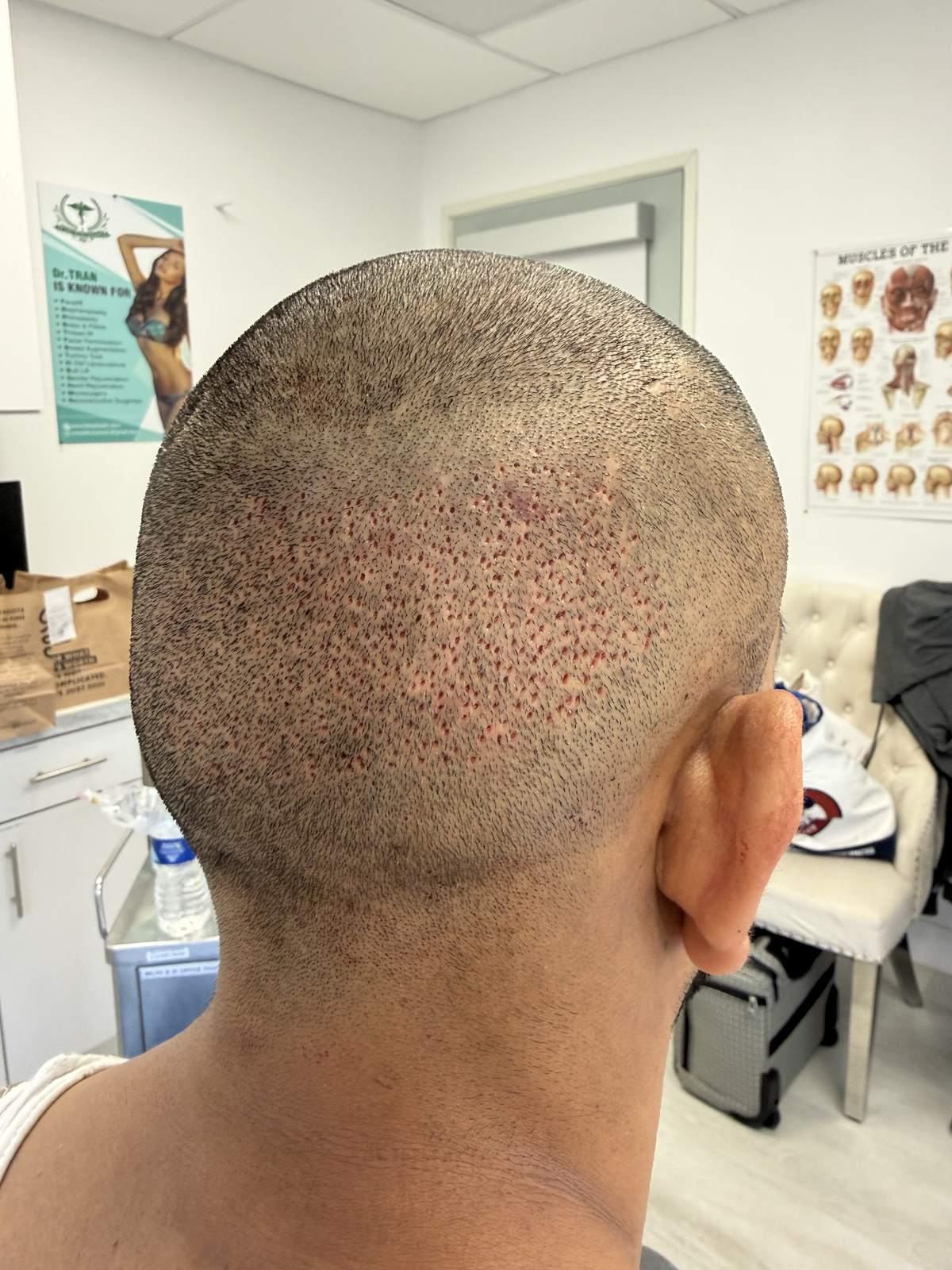
Using a specialized micro-punch tool, Dr. Tran carefully extracts individual follicular units from the donor zone. Each follicular unit contains 1 to 4 hair strands. The extraction pattern is distributed evenly across the donor area to avoid over-harvesting and to maintain a natural donor appearance.
Modern FUE clinics use motorized and manual punch systems — including robotic-assisted FUE technology — to maximize graft survival rates and minimize trauma to the surrounding scalp tissue.
Step 4 — Graft Sorting and Preservation
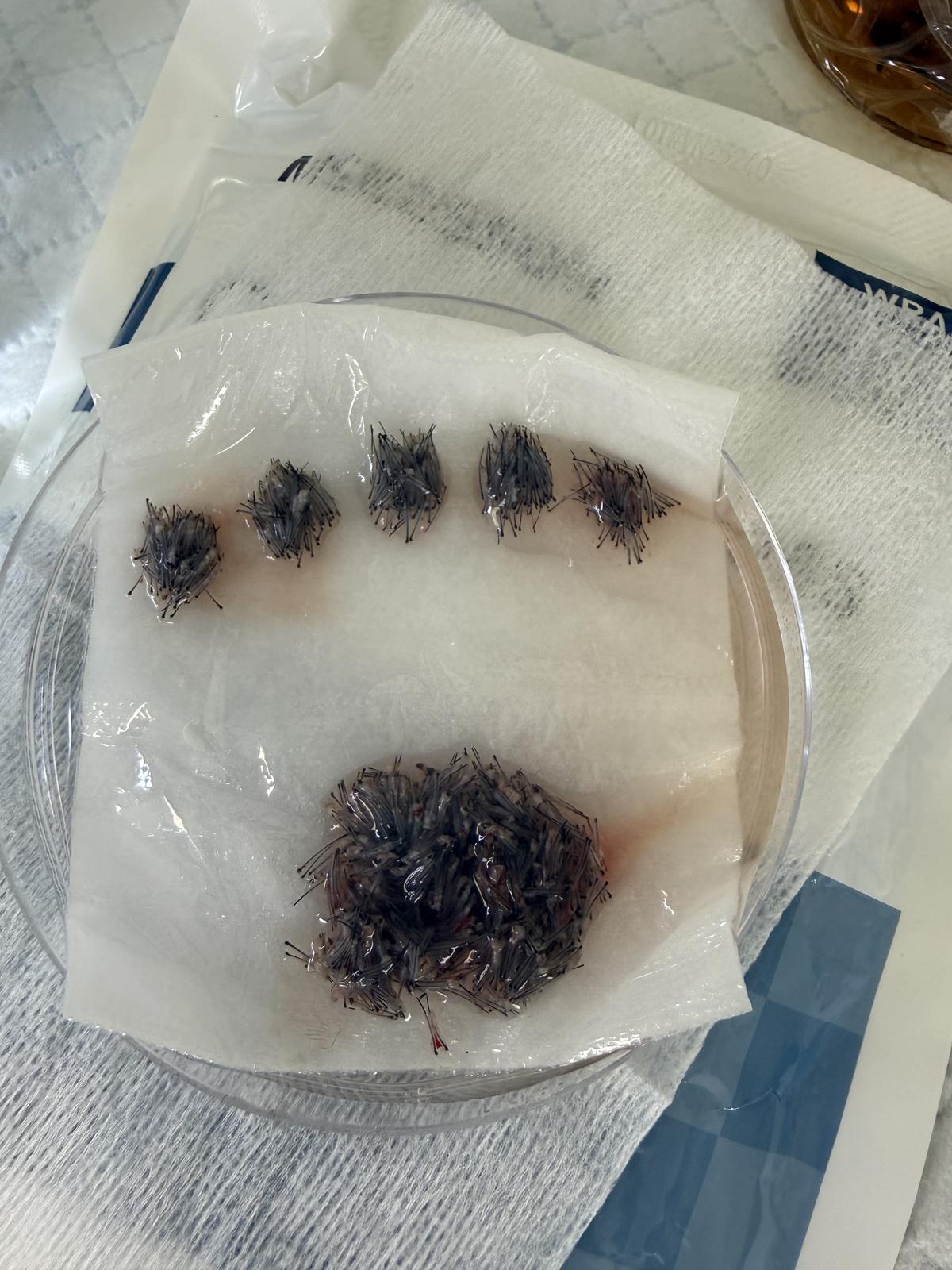
Extracted grafts are immediately placed into a specialized preservation solution and kept at a controlled temperature to maintain follicle viability. A trained surgical team sorts and inspects each graft under magnification to ensure only healthy, intact follicles are used for transplantation. Graft survival rate is a critical quality indicator in FUE — when handled correctly, most clinics achieve survival rates of 90% or higher.
Step 5 — Recipient Site Creation and Graft Implantation
Dr. Tran creates tiny incisions (recipient sites) in the thinning or bald area at precise angles, depths, and densities tailored to your natural hair growth pattern. This is the most artistically demanding phase — the angle and placement of each incision determines whether the final result looks natural or artificial.
Each graft is then individually implanted into the recipient sites. Density, hairline design, and temple points are all customized for your specific facial anatomy.
Step 6 — Post-Procedure Care and Instructions
After the procedure, you will receive detailed aftercare instructions, prescribed medications (anti-inflammatories, antibiotics if needed), and a follow-up appointment schedule. The donor area heals within days, and tiny scabs around transplanted grafts fall off naturally within 1 to 2 weeks.
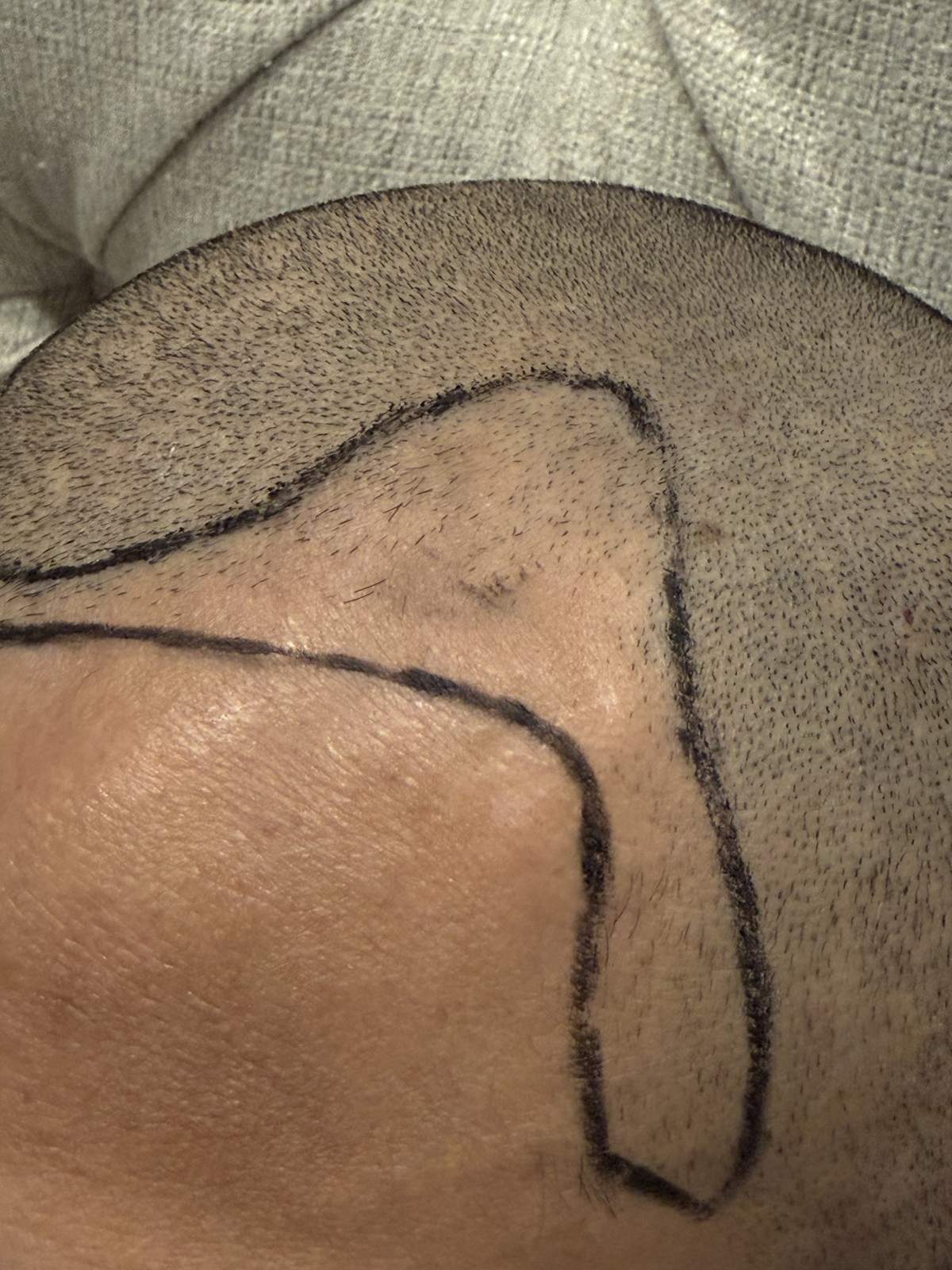
FUE Hair Transplant: Hairline Design, Donor Area & Grafts
Real photos from an FUE hair transplant at our Huntington Beach clinic showing the marked hairline design, the donor area, and extracted follicular unit grafts.

FUE vs. FUT vs. DHI: Which Hair Transplant Technique Is Right for You?
Understanding the differences between FUE, FUT, and DHI helps you make a confident, informed decision.
FUE (Follicular Unit Extraction)
Best for: Patients who want no linear scar, shorter recovery, and the flexibility to wear short hair. Ideal for mild to advanced hair loss. Grafts are extracted individually using a micro-punch. Recovery takes 5 to 7 days. Suitable for scalp, beard, and eyebrow restoration.
FUT (Follicular Unit Transplantation)
Best for: Patients needing a very large number of grafts in a single session (3,000+). A strip of scalp is surgically removed from the donor area, leaving a linear scar. Longer recovery time but higher graft yield per session. Learn more about FUT hair transplant.
DHI (Direct Hair Implantation)
Best for: Patients seeking maximum density in a focused area without shaving. Uses a Choi Implanter Pen to extract and implant follicles simultaneously, giving greater control over angle and depth. Best suited for smaller, targeted areas. Learn more about DHI hair transplant.
Bottom Line
For most patients seeking natural results, minimal scarring, and faster recovery, FUE remains the superior and most recommended technique. Dr. Tuan Tran will advise the best approach for your individual case during your consultation at our Huntington Beach clinic.
Who Is a Good Candidate for FUE Hair Transplant?
FUE is suitable for a wide range of patients. The best candidates typically include:
- Men with male pattern baldness (androgenetic alopecia) — Norwood Scale grades II through VI
- Women experiencing diffuse thinning or frontal hairline recession
- Patients with sufficient donor hair density at the back and sides of the scalp
- Individuals in good overall health with realistic expectations about results
- Patients who have stabilized hair loss (not actively losing large amounts of hair)
- People looking to restore beard density, eyebrows, or correct scarring from previous procedures
You may not be an ideal candidate if your donor area is too thin or if your hair loss is still rapidly progressing. Dr. Tran will assess your candidacy thoroughly during your free consultation at our Huntington Beach office.
FUE Hair Transplant Recovery Timeline: What to Expect Week by Week
Days 1 to 3 — Immediately After Surgery
Mild swelling, redness, and tenderness in both the donor and recipient areas are normal. Tiny scabs begin forming around each transplanted graft. Sleep with your head elevated to reduce swelling, and avoid touching, scratching, or washing the transplanted area during this period.
Days 4 to 7 — Early Healing
Swelling begins to subside. You may gently wash your hair using the technique taught by our team. Most patients feel comfortable returning to desk work and light daily activities by day 5 to 7. Avoid sun exposure, strenuous exercise, and swimming.
Weeks 2 to 4 — Shedding Phase (Shock Loss)
This is the most psychologically challenging phase — transplanted hairs begin to shed. This is completely normal and expected. The hair follicles themselves remain in place and will begin regrowing. Shedding is a natural part of the hair growth cycle reset and confirms the process is working correctly.
Months 2 to 4 — Dormancy and Early Regrowth
The transplanted follicles enter a resting phase before beginning new growth. Toward the end of month 3, fine new hairs begin to emerge. Growth at this stage may be thin and wispy — this is perfectly normal.
Months 4 to 8 — Visible Progress
Hair growth accelerates noticeably. Texture and density continue to improve. Many patients begin to see a meaningful transformation by month 6.
Months 9 to 12 — Continued Maturation
Hair thickens and matures, and the hairline becomes more defined. The majority of transplanted hairs are growing well by this stage.
12 to 18 Months — Final Results
Full, permanent results are visible between 12 and 18 months post-procedure. The transplanted hair is now indistinguishable from the surrounding natural hair — it grows, can be cut, styled, and treated exactly like your original hair. See real patient before and after results.
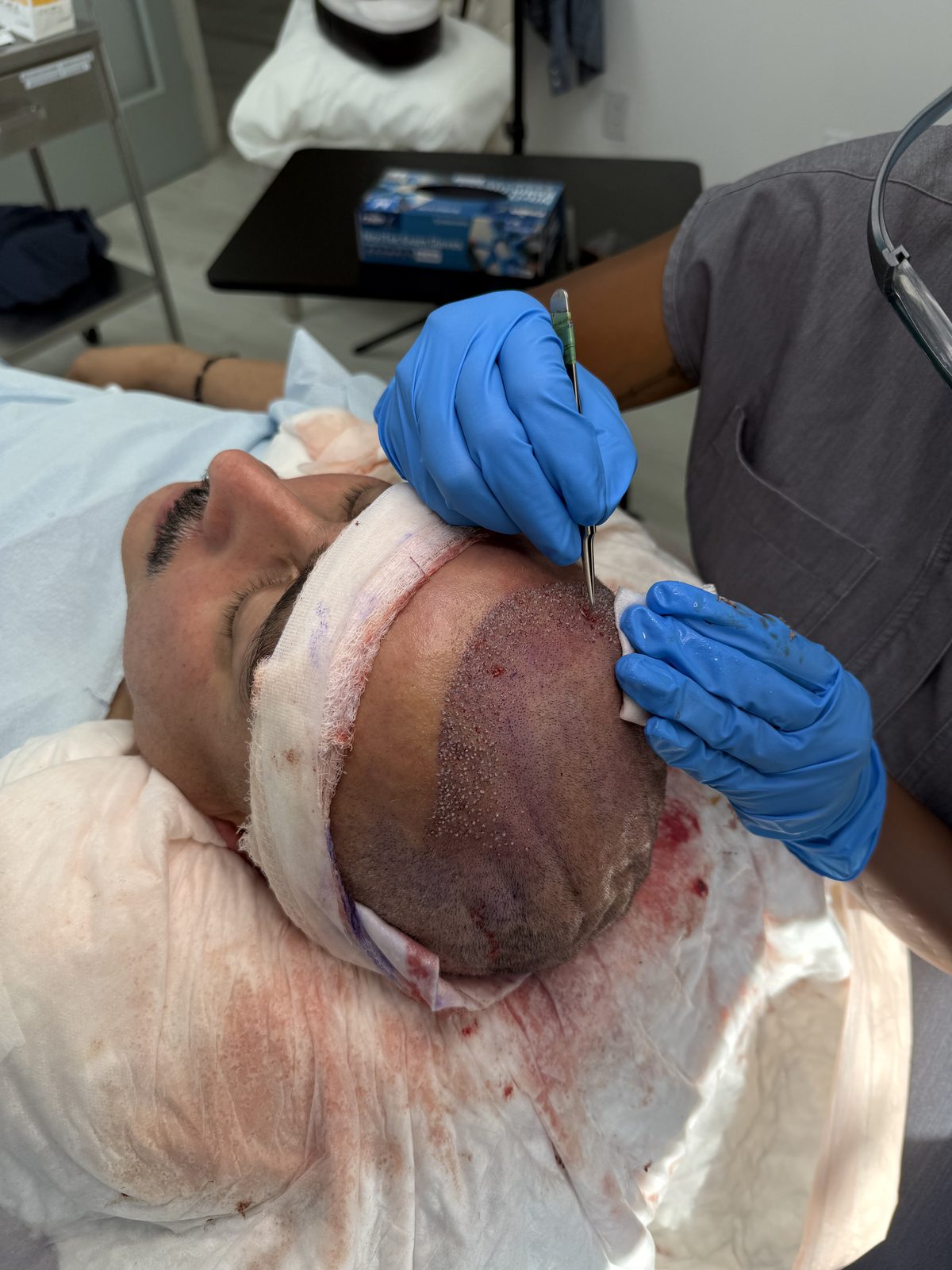
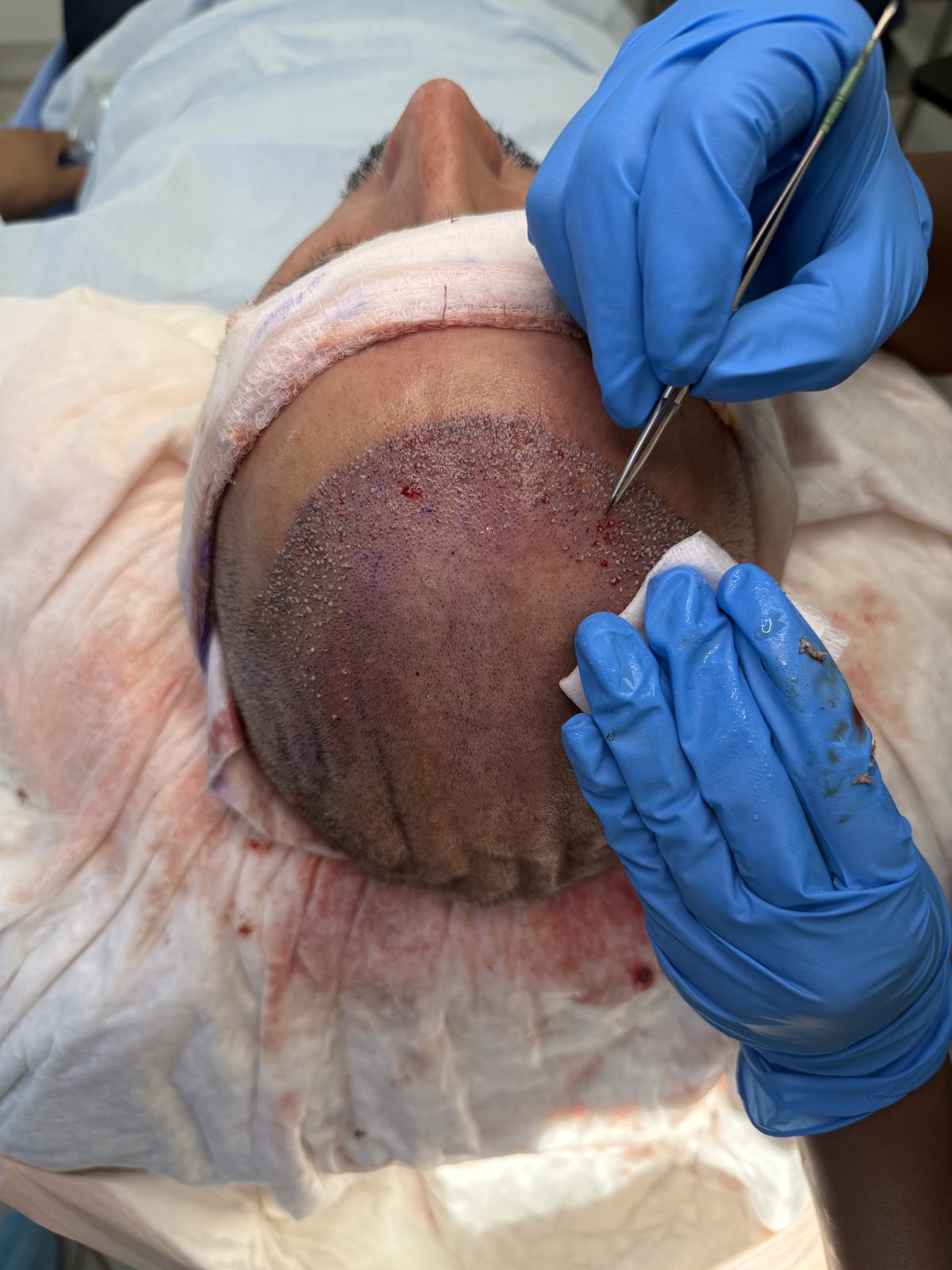
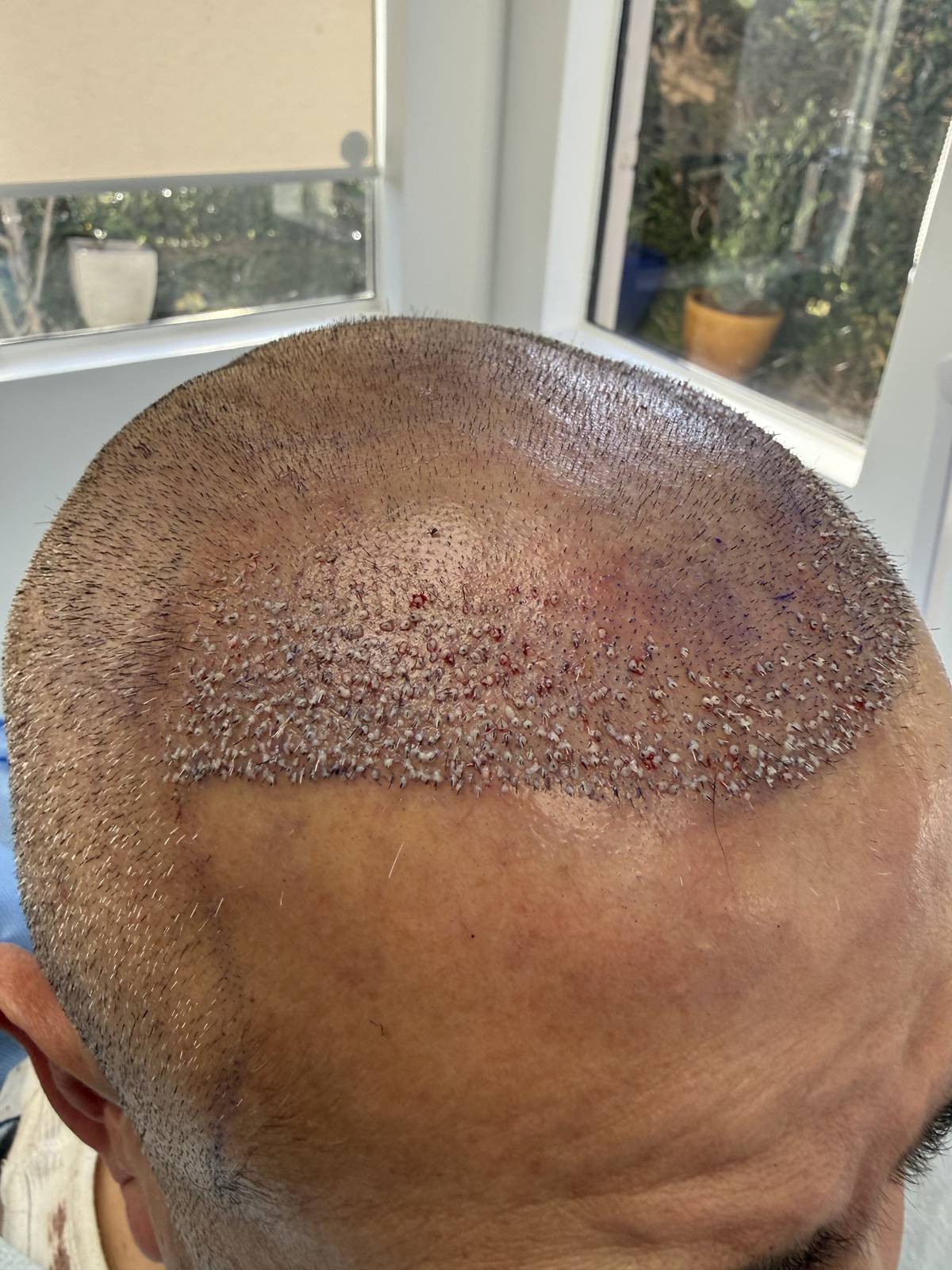
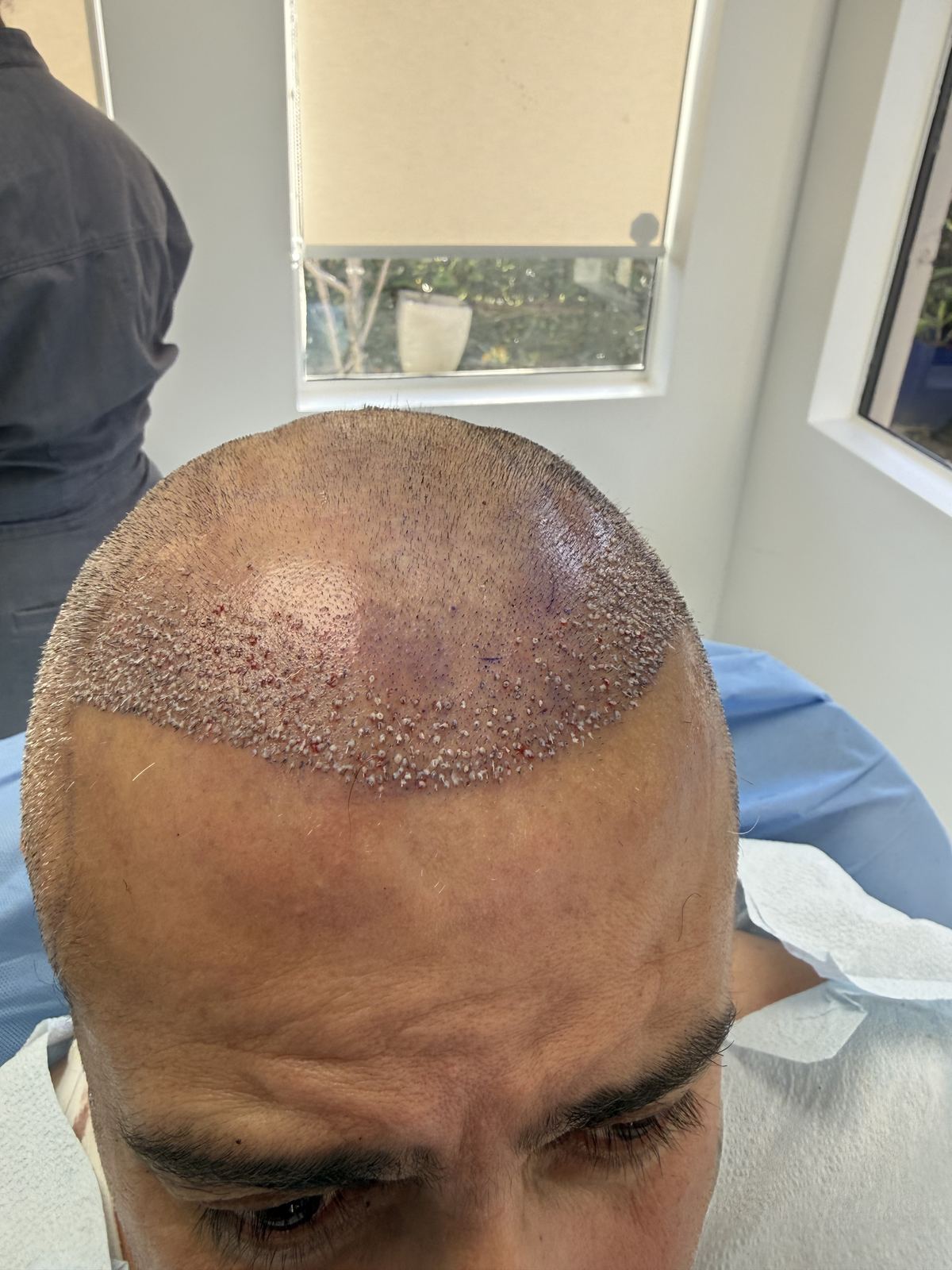
FUE Hair Transplant: During the Procedure & After
Real photos from an FUE hair transplant at our Huntington Beach clinic, taken during the procedure and immediately afterward.
How Much Does FUE Hair Transplant Cost?
The cost of FUE hair transplant varies depending on the extent of hair loss, the number of grafts required, and your individual treatment plan. Because every patient’s scalp and goals are different, pricing is assessed on a case-by-case basis during a professional consultation. Contact us to schedule a free consultation and receive a personalized quote tailored to your specific needs.
Frequently Asked Questions About FUE Hair Transplant
Does an FUE hair transplant hurt?
The procedure is done under local anesthesia, so patients feel little to no pain during surgery — usually just a mild sting during the numbing injection. Mild soreness for a few days is easily managed with over-the-counter medication.
Will people be able to tell I had a hair transplant?
When performed by a skilled surgeon, no. Grafts are placed at natural angles and densities, and because FUE leaves no linear scar, the result is undetectable — even with short hair.
Is an FUE hair transplant permanent?
Yes. Donor follicles come from the genetically resistant zone at the back of the scalp and continue to grow for life once transplanted.
How many grafts will I need?
It depends on your degree of hair loss and goals — early loss may need 800 to 1,500 grafts, moderate loss 1,500 to 2,500, and advanced cases 2,500 to 4,000 or more. Dr. Tran gives a precise estimate at your consultation.
Does FUE leave any scars?
FUE leaves only tiny dot scars in the donor area, roughly 0.6 to 1.0 mm each, which are virtually undetectable even with a shaved head — far less visible than the linear scar from FUT.
Can women get an FUE hair transplant?
Yes. FUE is effective for female pattern thinning, hairline recession, and traction alopecia when the donor area is stable and healthy.
When will I see results after my FUE transplant?
Transplanted hairs shed in weeks 2 to 4, which is normal. New growth begins around months 3 to 4, and full, final results appear between 12 and 18 months.
How do I choose the right FUE surgeon?
Look for a board-certified plastic surgeon who specializes in hair restoration, with a strong portfolio of natural results. Avoid clinics that guarantee graft counts without an in-person assessment.
FUE Hair Transplant in Huntington Beach
If you are in Huntington Beach and considering FUE hair transplant, ensure you consult with a board-certified plastic surgeon who specializes in hair restoration. A thorough in-person evaluation — covering your scalp health, donor density, and hair loss pattern — is the most important step before any procedure. Schedule your free consultation with Dr. Tuan Tran today and take the first step toward a natural, permanent hairline.