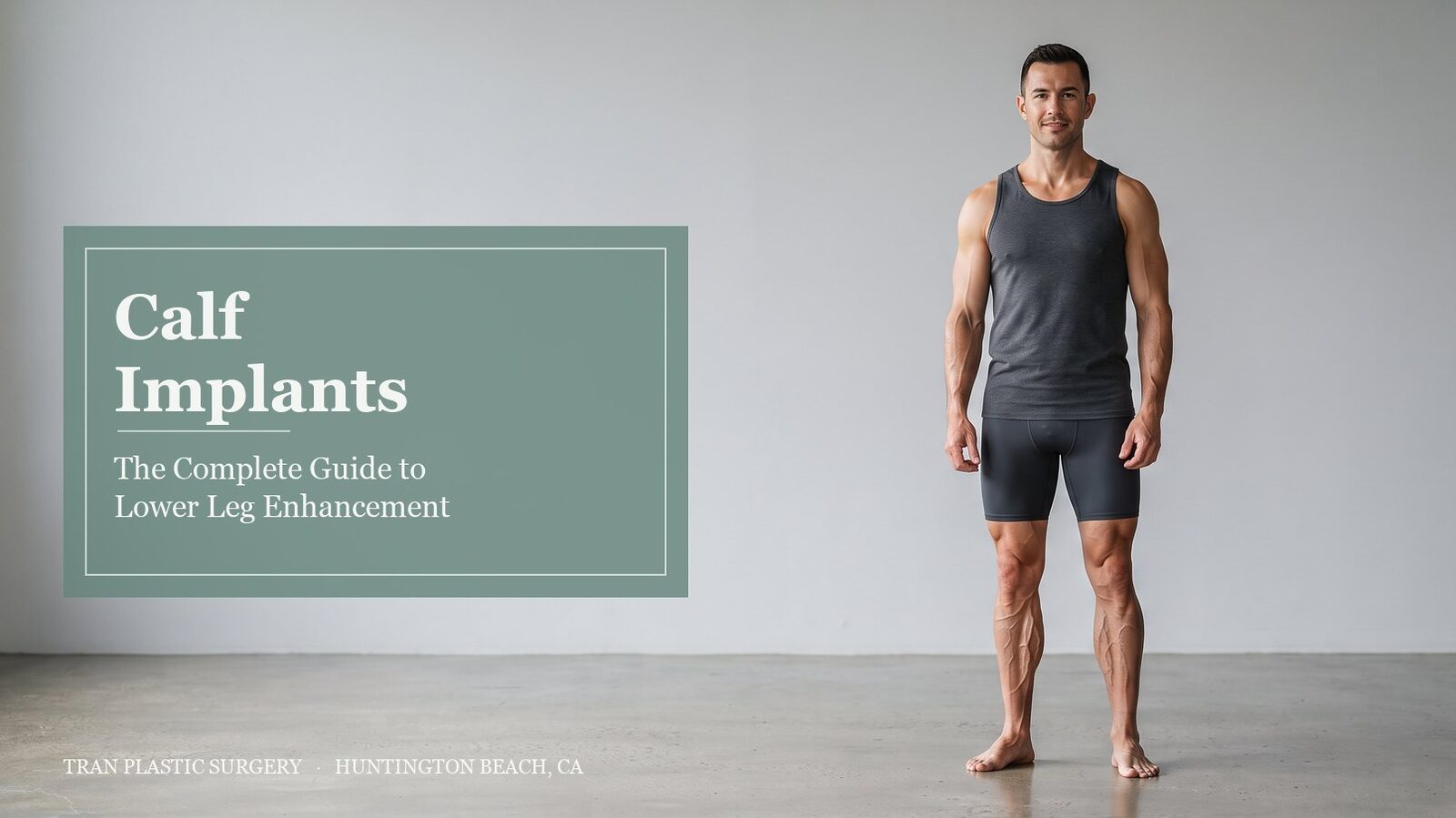
Calf implants are solid silicone implants placed in the lower leg to enhance the size, shape, and definition of the calf muscles. They are a popular option for men and women whose calves stay underdeveloped despite consistent training, as well as for patients looking to correct asymmetry or a congenital or injury-related deformity. Performed as an outpatient procedure through a small, well-hidden incision behind the knee, calf implants deliver permanent, natural-looking contour that does not depend on the gym to maintain. At Tran Plastic Surgery in Huntington Beach, calf implants are customized to each patient’s leg anatomy and aesthetic goals for balanced, proportional results.
What Are Calf Implants?
Calf implants are made of soft, solid silicone and are placed in a pocket created above the gastrocnemius muscle, just beneath the fascia — the strong connective-tissue layer that wraps the muscle. This subfascial placement keeps the implant secure, allows it to move naturally with the leg, and produces a result that looks and feels like well-developed muscle.

Depending on your anatomy and goals, one or two implants can be placed in each leg. Using two implants per leg — one along the inner (medial) head and one along the outer (lateral) head of the gastrocnemius — allows your surgeon to build a fuller, more balanced calf shape. Implant size and profile are selected to match your frame, and symmetry between the legs is carefully planned before surgery.
Calf Implants vs. Fat Transfer to the Calves
There are two main ways to add volume to the lower leg, and understanding the difference helps you choose the right approach.
Calf Implants
Solid silicone implants provide predictable, permanent volume and are ideal for significant enhancement or for lean patients who do not have enough excess fat to harvest. The shape and projection are chosen in advance and do not diminish over time.
Calf Fat Transfer
Fat transfer uses liposuctioned fat from another area of your body to add softer, more subtle volume to the calves. It can look very natural for modest enhancement, but it requires adequate donor fat, and a portion of the transferred fat is typically reabsorbed, making the final result less predictable than an implant.
During your consultation in Huntington Beach, Dr. Tuan Tran will help you decide which option best fits your body type and the degree of enhancement you want.
Who Is a Good Candidate for Calf Implants?
Calf implants are suitable for a wide range of patients. Good candidates typically include:
- Men and women with naturally thin or underdeveloped calves that do not respond to targeted training
- Patients with calf asymmetry from injury, prior surgery, or genetics
- Individuals correcting a congenital or post-injury deformity, such as calf atrophy following trauma or a medical condition
- Bodybuilders and athletes seeking better proportion between the lower and upper leg
- Non-smokers, or those willing to stop smoking well before and after surgery
- Healthy individuals at a stable weight with realistic expectations about size and proportion
The best way to confirm candidacy is a thorough in-person evaluation, since leg anatomy, skin quality, and muscle tone vary significantly from patient to patient.
How Does Calf Implant Surgery Work?
Step 1 — Consultation and Leg Assessment
Your surgeon evaluates your calf size, muscle development, skin elasticity, and leg proportions relative to your overall frame. Implant size, shape, and position are selected based on your anatomy and desired outcome.
Step 2 — Anesthesia
Calf implant surgery is typically performed under general anesthesia or IV sedation to keep you comfortable throughout the procedure.
Step 3 — Incision Placement
A small incision is made in the natural crease behind the knee (the popliteal crease), where the resulting scar is well concealed once healed.
Step 4 — Creating the Implant Pocket
The surgeon creates a precise pocket beneath the fascia, over the gastrocnemius muscle. This subfascial placement supports the implant, minimizes the risk of shifting, and helps the result move naturally with the leg.
Step 5 — Implant Placement
The silicone implant — or two implants per leg for added fullness — is positioned to align with the natural contour of the calf. Symmetry between both legs is carefully checked before closing.
Step 6 — Closing and Recovery Setup
Incisions are closed with sutures, and the lower legs are wrapped to support healing, reduce swelling, and help the implants settle into the correct position.
Calf Implant Recovery Timeline: What to Expect
Days 1 to 7 — Initial Healing
Swelling, bruising, and tightness in the lower legs are expected during the first week. Walking is limited and done slowly and carefully, and keeping the legs elevated helps reduce swelling. Most patients take about a week off work, especially for jobs that require standing or physical activity.
Weeks 2 to 3 — Early Recovery
Swelling gradually subsides and walking becomes more comfortable. Light daily activities can typically resume, though strenuous leg activity and exercise remain restricted.
Weeks 4 to 6 — Return to Light Activity
Most patients can resume light upper body workouts and gentle movement. Direct calf training, running, and heavy lower body exercise are generally still restricted to protect the healing implant pocket.
Weeks 6 to 8 — Return to Full Activity
Most patients are cleared to gradually resume full exercise, including calf and lower body training, by week 6 to 8. Your surgeon will confirm the right timeline for your specific healing progress.
Months 3 to 6 — Final Results
Residual swelling fully resolves and the implants settle into their final position, revealing the complete result. Scars behind the knee continue to fade and become less noticeable over this period.
Benefits of Calf Implants
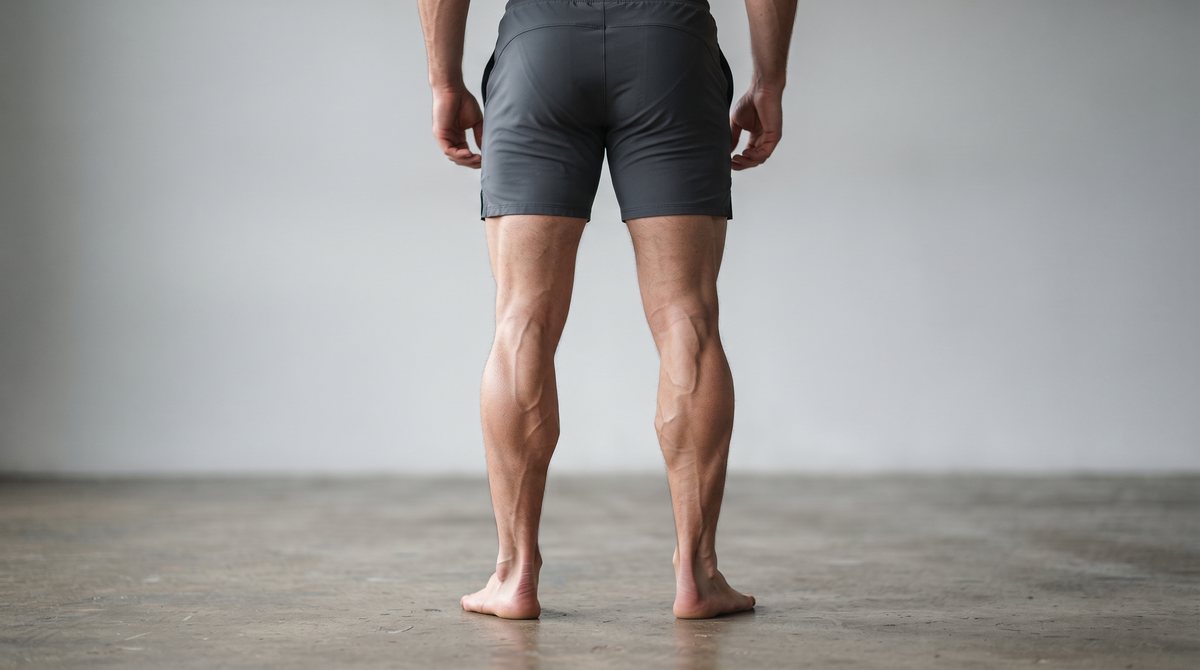
- Permanent enhancement of calf size and shape that does not depend on continued training to maintain
- Improved symmetry for patients with calf asymmetry from injury, genetics, or a medical condition
- Natural-looking, natural-feeling definition thanks to subfascial placement over the muscle
- Better proportion between the lower and upper leg for a balanced physique
- Minimal, well-concealed scarring hidden in the crease behind the knee
- Can be combined with other muscle-enhancement procedures such as bicep and tricep implants for complete body contouring
Calf Implants in Huntington Beach
If you are in Huntington Beach or the surrounding Orange County area and considering calf implants, look for a board-certified plastic surgeon experienced in calf augmentation and body contouring. A thorough in-person evaluation — covering your leg anatomy, skin quality, and proportions — is the most important step before any surgery. Choose a surgeon who will walk you through realistic expectations, show you real before and after results, and provide a clear, transparent treatment plan. Schedule a consultation with Dr. Tuan Tran to find out if calf implants are right for your goals, or contact our Huntington Beach office with any questions.
Frequently Asked Questions About Calf Implants
What are calf implants made of?
Calf implants are made of soft, solid silicone. They are solid rather than filled with gel or saline, giving them a firm, muscle-like feel that blends with your own calf muscle.
Do calf implants look and feel natural?
Yes. Placed beneath the fascia over the muscle, they move naturally with the leg and look like well-developed muscle.
Will I have visible scars after calf implants?
The incision is placed in the natural crease behind the knee, where the scar is well concealed and fades over time.
Can I walk normally after calf implants?
Walking is limited and done carefully for the first several days. Most patients return to comfortable normal walking within a couple of weeks and full activity by 6 to 8 weeks.
How much do calf implants cost?
Cost depends on whether one or two implants per leg are used and your individual plan. You will receive a personalized quote after your consultation.
Can calf implants correct a leg deformity or asymmetry?
Yes. In addition to cosmetic enhancement, calf implants are commonly used to restore balance in patients with asymmetry or atrophy from injury or a medical condition.
Are calf implants only for bodybuilders?
No. They are also used for naturally thin or underdeveloped calves, asymmetry, and deformity correction — for both men and women.
What are the risks of calf implant surgery?
As with any surgery, possible risks include infection or implant shifting. An experienced surgeon and proper aftercare keep these risks low.